
Breaking the Procrastination Loop: Why We Put Things Off and How to Move Forward
We’ve all been there. There’s something we know we need to do, perhaps an important phone call, starting a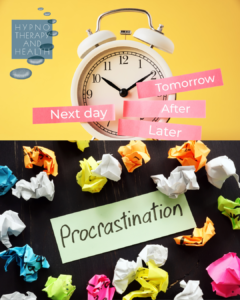 new project, tackling that growing pile of paperwork, or finally getting around to making a change. We know it needs doing, we may even want to do it, yet somehow we find ourselves doing everything else instead!
Suddenly, the kitchen needs cleaning, the emails need checking, or we decide that now is the perfect time to reorganise a cupboard. Sound familiar?
Procrastination is often dismissed as laziness or poor time management, but there is usually much more going on beneath the surface. In many cases, procrastination is driven by our emotions, our thought patterns and subconscious beliefs that can keep us stuck in a frustrating cycle of avoidance.
What’s Really Behind Procrastination?
One of the biggest misconceptions about procrastination is that it’s simply about not wanting to do something. Often, it’s actually about not wanting to experience the feelings associated with doing it. Perhaps we’re worried about getting something wrong, fear being judged, feel overwhelmed by the size of a task or doubt our ability to succeed. Sometimes, the pressure we place on ourselves to get everything absolutely right can become so great that doing nothing feels safer than risking an imperfect result.
Our brains are naturally wired to seek pleasure and avoid discomfort. When a task triggers anxiety, uncertainty or self-doubt, our primitive brain can interpret this as something to avoid. Finding a distraction provides temporary relief, and that little burst of comfort reinforces the behaviour. Unfortunately, the relief doesn’t last. The task is still there, often accompanied by a growing sense of guilt, frustration and pressure. We then feel even less inclined to tackle it, creating a loop that can be difficult to break.
The Role of Our Subconscious Mind
Our past experiences can have a powerful influence on how we approach situations today. Sometimes, we develop subconscious beliefs that operate quietly in the background without us even recognising them.
Perhaps we were criticised for making mistakes, felt we had to achieve high standards to gain approval, or experienced situations where stepping outside our comfort zone resulted in disappointment. Over time, these experiences can contribute to beliefs such as “I’m not good enough”, “I’ll probably get it wrong” or “I need to get everything perfect”. These thoughts can influence our behaviour without us consciously connecting the two.
Perfectionism, fear of failure, fear of success and a lack of confidence can all contribute to procrastination. We might convince ourselves that we work better under pressure, when actually we’re avoiding the discomfort of getting started. The interesting thing is that procrastination can become a familiar pattern. Our brains like familiarity, even when that familiarity isn’t particularly helpful!
How Can We Break the Cycle?
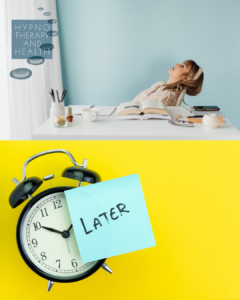 The first step is to stop being hard on ourselves. Beating ourselves up for procrastinating simply adds another layer of negative emotion to an already uncomfortable situation. Instead, try approaching things with curiosity. What is it about this particular task that you’re avoiding? Is it fear, uncertainty, lack of confidence or simply feeling overwhelmed?
Breaking a task into smaller, manageable steps can make an enormous difference. Rather than focusing on the entire project, concentrate on the first ten minutes. You don’t need to complete everything today; you just need to take the first step.
It’s also important to change the way we talk to ourselves. Replace “I can’t do this” with “I can give this a go”. Instead of waiting until you feel motivated, recognise that motivation often follows action rather than preceding it. Small achievements help build confidence, and each positive experience gives the brain an opportunity to develop more helpful patterns.
How Solution-Focused Hypnotherapy Can Help
At Hypnotherapy and Health, I work with clients to understand how their thinking patterns and emotional responses influence their everyday lives. Solution-Focused Hypnotherapy combines positive, forward-focused conversations with relaxation and hypnosis. It helps calm the emotional part of the brain, reduce anxiety and encourage more helpful thinking patterns. Rather than becoming stuck analysing everything that has happened in the past, we focus on the future you want to create. We explore your strengths, resources and previous achievements, helping you build confidence in your ability to make changes.
Hypnosis provides an opportunity to enter a deeply relaxed state, allowing the mind to step away from its usual cycle of overthinking and become more receptive to positive suggestions and new perspectives. Over time, this can help you develop a more confident approach to challenges, manage uncomfortable emotions and feel more comfortable taking action.
You Don’t Have to Wait for the Perfect Moment
One of the biggest traps of procrastination is waiting until we feel ready, confident or completely motivated before we begin. But what if you don’t need to feel ready? What if you simply need to start? Progress doesn’t require perfection. It requires small, consistent steps in the right direction.
So, if there’s something you’ve been putting off, perhaps today is the day to take that first small step. Not tomorrow, not next Monday and certainly not when everything else is perfectly organised! Remember, you don’t have to climb the entire mountain today. You just need to start walking.
If procrastination, overthinking or self-doubt are getting in the way of the life you want to lead, Solution-Focused Hypnotherapy can help you find a way forward.
At Hypnotherapy and Health, I’m here to help you move beyond the things that hold you back and towards a calmer, more confident you. Sometimes, the hardest part is simply getting started.